
This exclusive piece explores extraordinary interviews and stories from worldwide.
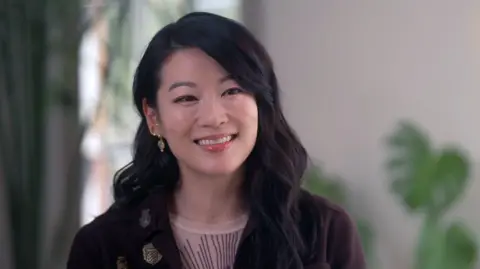
"{I hated that I looked Asian, that I didn't have light-colored eyes and fair hair, because those were the beauty standards back then," says Arden Cho, who portrayed Rumi in Netflix's chart-topping animated film, the K-pop themed animation.
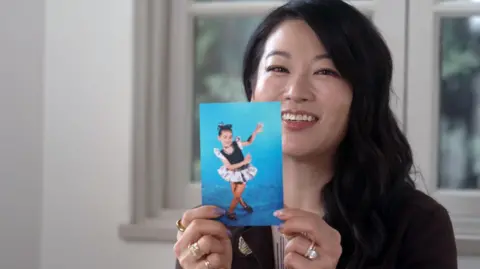
The performer, forty, recalls her early years in the southern state, as the firstborn child of parents who emigrated from Korea and her journey toward belonging in American society.
In the film, which tells the story of a female K-Pop trio who must rescue humanity from evil forces, Rumi has to accept her identity as part human, part demon – and when she first saw the screenplay, this resonated powerfully.
"Growing up in the US, identifying as American but having others view me like I'm not, trying to figure out my sense of self as an Asian-American, as a Asian-American, as a female," she says.
These elements were aspects of her formative years that paralleled Rumi's journey.
"Truthfully, at different points in my existence, I hated a lot of myself and I wanted to be someone else.
"During childhood, what you see influences your development and I feel like I just didn't see sufficient individuals that look like me."
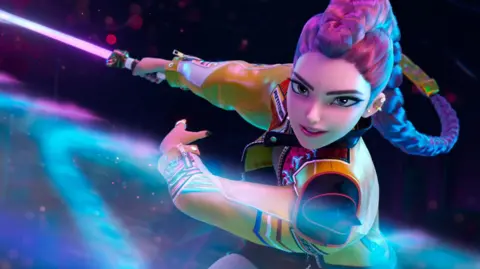
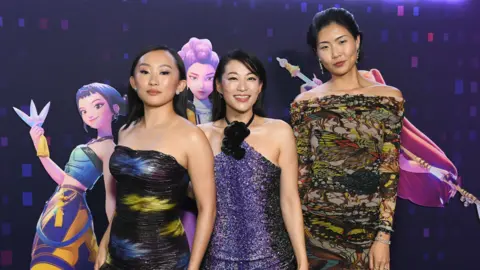
When it debuted on the platform in June, KPop Demon Hunters registered 33 million views in just 14 days, and reached the highest positions of the Netflix charts in dozens of nations. To be part of the first Hollywood animated film with a Korean setting, with Asian protagonists, was for her "a dream come true" – but it has also established her as a inspiring figure for Asian-American children, the kind that was missing when in her youth.
She says many individuals of Korean descent have expressed it's "such a refreshing moment", making them feel pride for the first instance of their dual heritage and cultural roots.
"In my view K-Pop has genuinely broken barriers. K-beauty has had such a big impact on Korea being loved. But I feel like this movie is the one that tipped it over the edge, of, inspiring travel to Korea, now," Cho says.
But the movie's triumph was not guaranteed and Cho admits she felt the team making it were "sometimes facing an uphill battle".
"I feel like it's unfortunate to say this, but any time there's an Asian-led project, people feel like a gamble," she reveals.
So, when she took on the role, she took steps to meet everyone working on the film face-to-face, she adds.
The film was launched against the backdrop of heightened enforcement actions in the US as part of mass deportation efforts, which sparked protests in numerous regions.
As an Asian-American living in the US "it's heartbreaking and disappointing," she states. "Immigrants have made America what it is."
Korean news sources have suggested that up to one hundred fifty thousand individuals from Korea lacking legal status, including adopted children, are among those who could be deported.
As an adult, Cho understood that the prejudice she had encountered when she was younger was largely due to a lack of education, as people didn't know what it meant to be Korean or Asian.
"But now, in the modern era, when I feel like the world and people ought to be more informed, it's deeply disheartening and sometimes I feel like we feel so hopeless," she says.
Because of this, it's particularly meaningful, she notes, that the film could bring "optimism and happiness to all these different communities".
"Perhaps this explains it's sort of like this movie of the summer, because we just needed positivity and a unifying element all together."
The advancement of artificial intelligence is a significant worry for the film industry, creating the potential that in future it could be used to make a film like KPop Demon Hunters.
Cho says she is aware that AI is already being used to replicate actors' voices, but wants to "have hope in humanity" that individuals will still pursue art created by humans.
"Sure, I'm sure they're going to have AI actors and vocalists. I know they're already here. I understand our voices are already being altered, but I hope the public have appreciation and want and love for authentic creations."
The film has also been leading the global music charts, with multiple songs from its soundtrack appearing in the prestigious charts. It has its own fan creations, and audiences globally are calling for a follow-up.
Cho reveals she wishes she could answer the inquiry of whether that will happen – but both she and fans will have to await the platform or the studio, which made the film, to give it the green light.
"I'm aware rumors are circulating, the feedback is positive," she says. "So we shall see, and I believe everyone in the world would riot if it didn't happen."
- Initiating discussions, fostering relationships and combating false narratives through features, investigations, conversations and extraordinary stories


